How Lunar Phases Affect Surf Conditions for Enthusiasts
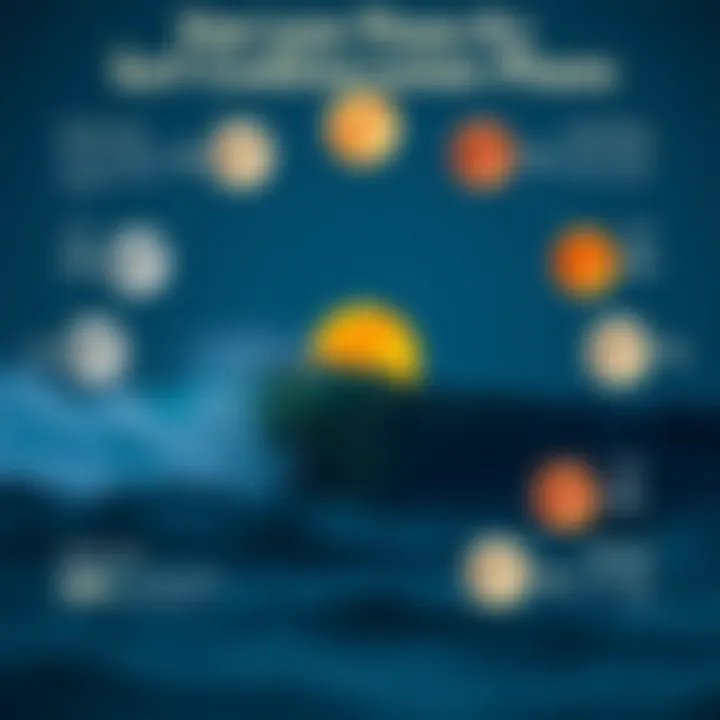
Intro
Understanding the forces that shape the ocean is crucial for surfers eager to catch the best waves. The lunar phases play a pivotal role in influencing tidal movements, which are fundamental to surf conditions. This guide aims to shed light on how these celestial cycles interact with the waters we ride, granting enthusiasts insight into planning their sessions for optimum surf. By apprehending the dynamics between lunar rhythms and tidal patterns, surfers can better appreciate the art of wave riding.
Understanding the lunar phases goes beyond mere astronomy; it is about harnessing knowledge to elevate your surfing game. Whether you're a budding surfer learning the ropes or a seasoned rider seeking improved performance, this article provides a variety of insights and practical applications of moon charts. Let’s delve into the essence of lunar influence on surfing.
Techniques and Skills
Wave Riding Essentials
Before we can effectively utilize moon charts to predict surf conditions, it's essential to grasp the basics of wave riding. Surfers need to understand the different types of waves and what conditions they thrive in. Waves are generated by wind, swell direction, and tide levels, all of which can fluctuate with the moon’s phases.
For beginners, the key points to focus on include:
- Paddling Techniques: Learning how to position oneself on the board and timing paddles to catch waves.
- Pop Up Efficiency: Mastering the technique of standing up quickly once the wave is caught.
- Weight Distribution: Understanding how to balance effectively on the surfboard to maneuver through waves.
As surfers gain confidence, they can start to tweak these techniques based on tide cycles indicated in moon charts. For instance, during a full moon, stronger tides may create better conditions for larger waves, suitable for those ready to take their skills to the next level.
Advanced Maneuvers and Tricks
Once you’ve mastered the essentials, stepping into the realm of advanced maneuvers offers a fresh challenge. Here, the phases of the moon can also play a role in dictating when to practice complex tricks. For example, surf breaks that are usually more consistent around the new moon might present better opportunities to work on more challenging moves like:
- Airs: Launching off the lip of a wave for aerial tricks.
- Carving Turns: Executing smooth transitions along the wave face.
- Cutbacks: Skillfully redirecting onto the wave to maintain speed and flow.
By understanding when to hit the water during optimal tidal conditions, surfers can practice these advanced tricks without the worry of inconsistent waves ruining their attempts.
Essential Knowledge for Timing
"Sure, the tides are controlled by the moon, but knowing when to paddle out can be the difference between an average session and the ride of your life."
Equipment and Gear
Surfboard Reviews and Comparisons
Selecting the right surfboard is a significant aspect of enhancing your surfing experience, especially regarding the interplay between the surfboard design and the tidal conditions brought on by the lunar phases. Depending on your surf locality and experience, the choice of board affects how well you paddle, maneuver, and ride waves.
- Shortboards: Great for advanced surfers looking for speed and performance on powerful waves.
- Longboards: Ideal for those who enjoy cruising on smaller, mellower waves.
- Fish Boards: Good all-rounders known for their versatility in various conditions.
Here, paddling out during lunar high tides may reveal hidden potential in your board’s performance, allowing you to better link moves with the shifting ocean.
Essential Accessories for Every Surfer
Surfers should also consider a range of accessories to improve their safety and effectiveness on the water. Some must-have extras include:
- Leashes: Keeps your surfboard connected while you’re in the water.
- Wetsuits: Essential for staying warm in cooler waters, particularly beneficial during certain surf conditions.
- Surf Wax: Helps to maintain grip on your board, which can be crucial as waves and tides change.
When assessing accessories, take into account the lunar cycle's potential impact on water temperatures and conditions.
In summary, understanding how lunar phases relate to the ocean can provide a competitive edge for any surfing enthusiast. With this guide, hopefully, you're now equipped with the insights to ride the waves at the right time, every time.
The Significance of the Moon in Surfing
In the world of surfing, the moon is not just a celestial body. It holds an important place in the lives of surfers who have come to recognize how lunar phases impact tidal patterns, which can ultimately affect surf conditions. Understanding the significance of the moon in surfing doesn't merely enrich the experience of riding the waves; it can very well become the deciding factor between a thrilling session and one that falls flat.
Tidal Mechanics and the Moon's Influence
One can't talk about the moon’s role in surfing without mentioning tides. The gravitational pull of the moon is a pivotal force behind tidal movements in the ocean. When we consider the relationship between the moon and tides, it becomes clear how intrinsic it is to tie our surf sessions to lunar cycles. As the moon orbits Earth, varying gravitational forces produce both high and low tides at regular intervals. These tides can cause noticeable differences in wave size and energy. To put it simply, larger swells tend to coincide with high tides, making them prime times for surfers.
Moreover, combining this knowledge with accurate moon charts can transform any surfer’s outing. The lunar calendar, with its rise and fall, acts as a practical tool that helps surfers pinpoint the best times to hit the waves based on expected tidal conditions. This means when you're thumbing through your planning notes, a glance at the moon chart could spell out whether you'll be catching clean barrels or struggling against lackluster waves.
Understanding Lunar Phases
On a deeper level, understanding lunar phases is pivotal for any surfer eager to optimize their experience. The moon transitions through its phases—new, waxing, full, and waning—each with unique characteristics impacting the tides. A full moon, for instance, aligns perfectly to produce higher tides, while the new moon can also bring about significant changes, with tidal ranges becoming more pronounced.
Surfers may notice that certain surf spots react distinctly depending on the lunar phase. For example, some beaches work better with a full moon due to the increased swell size and energy, whereas quieter tides during the new moon may favor beginners or those practicing.
In essence, awareness of lunar phases allows surfers not just to catch the tides but to ride the rhythm of nature itself. By marrying this astronomical knowledge with practical surfing skills, one can elevate their sessions to new heights.
Components of the Moon Chart
The moon chart is not just a pretty picture laid out in the sky; it’s a detailed roadmap that can guide surfers to some of the best waves. Comprehending its components is critical for making informed decisions about when to hit the water. Understanding these components allows surfers to adapt their strategies based on real-time lunar influences, optimizing their experience every time they paddle out.
Lunar Phases Explained
When we talk about lunar phases, we’re diving into a fascinating cycle that governs not just the night sky, but also the ocean's temperament. The moon’s journey through its phases—new moon, first quarter, full moon, and last quarter—affects the gravitational pull exerted on the Earth’s waters, which in turn creates changing tide levels that surfers are keenly aware of.
- New Moon: During this phase, the sun, moon, and Earth align, leading to spring tides—higher tides than usual. This is when water rushes in and out with increased vigor, translating to potentially excellent surfing conditions, mainly on the incoming tide.
- Full Moon: Similarly, a full moon also brings about spring tides. The extended swell may lead to powerful waves, but also challenging conditions. Here, beginners might find themselves in over their heads, while experienced surfers revel in the more dynamic surf.
- First and Last Quarters: These phases yield neap tides, where the sun and moon are at right angles to one another. Though the tides aren’t as extreme, consistent wind patterns can produce decent waves, and savvy surfers often capitalize on these moments for a more controlled ride.
Understanding these phases isn’t just about knowing when to ride; it’s about reading the ocean through the lens of lunar activity, which can make or break a surf session.
Tide Heights and Their Relevance
Tide heights are another crucial element that surfers must consider. It’s like looking at a puzzle; the pieces might not fit unless the conditions are right. The various heights of tides through the lunar cycle alter the surf landscape in many ways.
Here’s how tide heights impact surfing conditions:
- High Tides: When high tide hits, water covers more of the beach, which can lead to faster and steeper waves. Spots that typically produce poor conditions during low tide can become prime real estate for riders.
- Low Tides: In contrast, low tide exposes more beach and can often reveal reefs or sandbars. However, this can lead to less forgiving or choppy surf conditions, especially for those not well-versed in managing their boards over shallow waters.
- Tidal Range: Understanding the tidal range can also inform when to surf. Bigger tidal swings usually mean more energetic waters, which could translate into better surf. Knowledge about tidal heights is essential as these tiny fluctuations compound into significant changes in wave quality.
In all, the components of the moon chart serve as tools for surfers. They provide insights that increase the chance of encountering the surf conditions suited to one’s skills and preferences, making them crucial for anyone looking to enhance their experience on the water.
"Understanding the tides in relation to the moon is like laying a golden ticket to surf paradise in your hands."
For those eager to delve deeper, consider checking resources such as Wikipedia on Tides and National Oceanic and Atmospheric Administration for comprehensive data.
Practical Applications of Moon Charts in Surfing
Understanding how to apply moon charts can deeply enhance a surfer's experience, leading to more successful sessions on the water. By keeping an eye on lunar phases and tidal patterns, surfers can adjust their approach to match the ideal conditions. With all the factors at play, from tide heights to swell direction, it pays to have a game plan guided by lunar wisdom.
Choosing Optimal Surf Times
Timing is everything in surfing; it’s less about if you hit the waves and more about when. By looking at moon charts, surfers can pin down the best times to ride. Here's how it works.
Lunar Phases and Tidal Movements
The full moon and new moon significantly influence tidal movements. During these phases, tides tend to be higher and lower than average. Surfers usually find that the higher tides can push swells onto the reef or sandbars, which creates better wave conditions. Knowing when these phases hit allows surfers to pinpoint days that might produce the best surf.
Tide Tables as Allies
Tide charts work hand-in-hand with moon data. Surfing during the peak of high tide or falling tide can differ greatly in wave quality. Ideally, you might want to hit the beach about an hour after high tide when the waves start to clean up. Pay attention, though; local factors like wind direction and coastal configurations can alter everything.
Seasonal Variations
A savvy surfer also needs to consider seasonal changes. In winter, for instance, swells can be stronger, and combining that knowledge with moon phases can make for some epic rides. Thus, the more familiar you are with your local conditions throughout the year, the better equipped you are to select optimal surf times based on moon charts.
Tidal Surfing Strategies
Once you've mastered the timing of when to surf, it's crucial to adopt strategies that can adapt to various tidal conditions. Recognizing how waves react during different tide states can elevate your surfing experience. Here are some tips based on tidal differences:
Sandbars and Reef Breaks
- During Low Tide:
- During High Tide:
- Look for hidden sandbars or rocks to provide cleaner waves. Low tide often exposes these features, revealing the best spots. Take note that the same depth that cleans waves might also lead to shallow areas, so proceed with caution.
- Waves break more evenly and can push closer to the beach, making for a more exhilarating experience.
Swells and Wind Direction
- Pay attention to wind shifts; for example, lighter offshore winds can hold waves up higher and create appealing conditions. Understand how tides interact with local winds, and have a backup strategy if conditions aren't as expected.
"The ocean is a living entity, and knowing how to read it is key to becoming a great surfer.”
Adaptability is Key
- Surfing isn’t a one-size-fits-all experience. Adapting your technique based on moon chart predictions involves a constant reevaluation of your approach to each session. Experiment with different boards or even your style; sometimes, subtle adjustments can lead to completely different experiences.
For any surfer, integrating these practical applications of moon charts can transform how they interact with the ocean. It's about utilizing the lunar information to make well-informed decisions, enhancing not just the thrill of surfing but also the connection with the tides.
Analyzing Surf Conditions via Moon Charts


Understanding how to analyze surf conditions using moon charts is fundamental for any surfer looking to optimize their time in the water. The correlation between the moon's phases, tidal movements, and wave patterns can mean the difference between a decent surfing day and a spectacular one. By delving into this analysis, surfers can harness subtle yet crucial insights to pick the perfect time and place to catch waves.
Correlating Tide and Wave Size
When it comes to surfing, tide and wave size are intertwined in a dance influenced by the gravitational pull of the moon. As the tide rises and falls, it alters the shape of the seabed, which in turn impacts wave formation. Generally speaking, high tide can nurture larger and more powerful waves, especially in certain breaks. For instance, reef breaks often perform better during a rising tide while beach breaks might do the opposite.
Analyzing moon charts allows surfers to predict these tide movements. The forecasting of wave size is not merely guesswork; it’s a calculated approach based on historical data and lunar phases. By tracking the correlation between different lunar phases and their associated tides, surfers can anticipate wave height and quality. Make sure to pay attention to these key points:
- New Moon: Often leads to extreme tidal fluctuations, potentially resulting in more substantial wave action.
- Full Moon: Can also create larger swells; however, this varies depending on local geography.
- First and Last Quarters: These phases generally lead to less significant tidal shifts, often resulting in smaller waves.
Surf scientists and seasoned surfers often recommend keeping a personal log or journal about surf conditions experienced during different phases of the moon to better understand these patterns.
Local Factors Impacting Surf Quality
While moon charts provide crucial data on tidal movements, local factors also significantly influence surf quality. Understanding these variances can give surfers an edge. It’s one thing to know the tide’s movement, but quite another to grasp how local conditions interplay with it. Here are some vital local factors to consider:
- Geography of the Coastline: The shape of the shore and ocean floor can amplify or diminish wave heights. Curved beaches or cliffs can create unique breaks.
- Wind Direction: Offshore winds usually create clean, smooth waves, while onshore winds can produce choppy conditions.
- Weather Conditions: Storms and rainfall can alter water temperature and salinity, impacting both wave quality and the surfing experience.
- Human Activity: Disruption caused by boats, swimmers, or construction on the beach can alter wave patterns.
By blending data from moon charts with an understanding of local conditions, surfers can better predict not only the size but also the quality of the waves. Pay close attention to your local surf report and combine it with lunar data to enhance your ride. Remember, knowledge is power, and the ocean rewards those who prepare.
Adjusting Techniques Based on Moon Phases
The rhythm of the ocean is closely intertwined with the phases of the moon. For surfing enthusiasts, knowing how to adjust techniques based on these lunar phases can significantly enhance the experience on the water. The big thing to note here is that different moon phases can affect wave sizes, the power of currents, and even the overall mood you find when you hit the beach. Let's dive into this deeper, shall we?
Beginner Surfing Techniques During Full Moon
A full moon brings about the highest tidal ranges, which can create unique surfing opportunities. For beginners, it’s essential to adjust techniques to ensure a safe and enriching experience during these times.
- Timing Your Sessions: The full moon can lead to stronger tides. As a beginner, aim for low tide sessions when the waves may be less turbulent. When the tide is rising, the waves become steeper, making it easier to catch.
- Paddle Techniques: During these periods, having a good paddling technique is vital. The currents are more powerful, so focus on strong, consistent strokes. Remember, it’s not a sprint; rather, it's about finding your rhythm.
- Choose Your Board Wisely: Opt for a longer board which will help you maintain stability as you navigate tougher conditions. The buoyancy can make a world of difference when balancing on the waves.
- Mind the Shore Break: Learn to read waves. Beginner surfers should be aware of shore breaks—these can become quite fierce during a full moon. If you notice waves breaking close to shore, it’s best to steer clear until you gain more confidence.
- Stay Close to Experienced Surfers: If you’re out in the water with a group, keep your buddies near. Watching seasoned surfers tackle the waves can provide insights on how to adjust your movements effectively.
Advanced Surfing Strategies for New Moon
The new moon phase often means lower tides and, depending on certain factors, gentler surf conditions. For seasoned surfers, this presents an opportunity to tweak strategies that can take your performance to the next level.
- Utilizing Low Tides: The swells might be smaller, but don’t underestimate their potential. Use this chance to experiment with new tricks or refine your technique.
- Observe Reef Breaks: During low tides, you might find reefs exposed that create more challenging breaks. This is a fantastic time to practice your maneuverability and wave selection.
- Engage in Competitive Strategies: In quieter waters, competition for waves may increase. Prioritize early catches by positioning yourself wisely. Getting in early can often set you up for success.
- Focus on Speed and Flow: Lower waves allow for longer rides. Work on maintaining a smooth flow and speed while transitioning between maneuvers. This can set you apart from others in the water.
- Practice Your Skills in Different Positions: Try switching your stance or practicing aerials. A new moon offers an ideal platform to test skills in less intense conditions.
By closely observing the influence of lunar phases on the surf conditions, you'll gain a profound understanding of when and how to adapt your techniques. Whether you’re a novice or a pro, recognizing and adjusting to these lunar influences can lead to fruitful and enjoyable sessions on the water.
"The ocean is a symphony, and the moon is the conductor. Each phase creates a different tune for the waves to follow." — Unknown
For further reading, surf enthusiasts can explore resources on lunar impacts on tides through NOAA's Tides and Currents or look for communities on platforms like Reddit or Wikipedia.
Moon Chart Accessibility and Resources
When it comes to surfing, understanding the nuanced relationship between lunar phases and tidal patterns can be the key to not just catching waves, but catching the right ones. In light of this, the topic of moon chart accessibility and resources becomes fundamentally significant. More than just arcane knowledge, the ability to read and interpret moon charts can enable surfers to make informed decisions, maximizing their time in the water. With technology at our fingertips, the resources available today can simplify the information-seeking process, opening doors to better and safer surfing experiences.
Navigating Online Moon Chart Tools
In the digital age, a myriad of online tools are at a surfer's disposal for understanding moon charts. Websites dedicated to surf forecasts often include lunar phase data that can easily be accessed. Tools like Magicseaweed and Surfline offer graphical representations of tide patterns intertwined with lunar phases.
To make the most of these resources:
- Choose Reputable Sites: Look for platforms that provide real-time data and user-reviews.
- Use Filters: Many of these tools allow users to filter by location, type of surf spot, or specific date. This feature demonstrates how adaptable and user-friendly the tech can be.
- Cross-Reference Information: Use multiple sites to validate the data. A surfer wouldn’t head out without checking the forecast, would they?
Online tools may require a bit of trial and error to navigate, but with practice, they can yield rich information that benefits your surf session.
Mobile Apps for Surfers
Mobile applications offer surfers a convenient way to access moon charts while on the go. With apps tailored for various user levels—from beginners to advanced—these tools help keep surfers informed on surf conditions wherever they may be.
Some notable apps include:
- Tides Planner: A comprehensive tool that shows tidal phases, ideal for those who want detailed level information and moon phase tracking.
- Surfline: Known for surf reports and forecasts, it also integrates moon phase data seamlessly, making it an all-encompassing app for surfers.
- Swellinfo: This app combines swell data with lunar phases, helping surfers gauge the best time to hit the waves.
With push notifications and real-time updates, these apps serve as essential companions for surfers who want to ensure they’re timing their sessions to take advantage of optimal conditions.
"The ocean is not a place to get lost in, but to find yourself. With the right tools, every swell becomes an opportunity."
As surfers embrace these modern tools, the once complex task of understanding moon charts becomes an accessible and integral part of their surfing routine. By harnessing the right technologies, one can translate lunar positioning into an actualized surfing experience. The sea awaits, and so does the perfect wave.
Limitations of Moon Charts
Using moon charts to plan surf sessions does have its drawbacks. While they offer valuable insights into tidal patterns, being aware of the limitations is crucial for surfers hoping to optimize their experience. Importantly, moon charts present a simplified view of complex natural phenomena. They can’t account for every variable that influences surf conditions, so relying solely on them may lead to missed opportunities or unsafe situations. Here are some specifics to consider:
- Tidal Patterns: While the charts effectively illustrate the lunar impact on tides, they may not accurately reflect local variations. Every surf break has its unique characteristics that can change how tides affect wave formation, making local knowledge just as vital as lunar data.
- Weather Influences: Let’s not forget the role of weather. Sudden storms, wind changes, and atmospheric pressure can dramatically alter surf conditions regardless of the moon phase. A full moon might promise strong tides, but a brisk offshore wind could transform that potential into chop.
"It ain't the moon that makes the waves; it's the whole kit and caboodle of atmospheric dynamics."
- Personal Skill Level: Not all surfers respond to lunar phases alike. Individual skills and comfort levels mean that what works for one may not work for another. A setting predicted to be "ideal" could feel overwhelming for a novice, even if the charts suggest otherwise.
Overemphasis on Lunar Influence
The allure of moon charts can sometimes lead surfers to place too much emphasis on lunar cycles. Indeed, they offer a fascinating glimpse into nature's rhythms, but it's essential to approach them with a balanced perspective. Many factors contribute to wave quality and timing. For instance, experienced surfers often emphasize a more holistic approach that considers multiple elements:
- Local Conditions: Each surf spot has its own set of rules. Factors like reef structure and bottom composition play a vital role in wave formation. A surfer can get a thorough understanding through practice and observation at their favorite break.
- Crowd Dynamics: An ideal tide indicated by a moon chart may draw out more surfers. What looked like a perfect morning at dawn may quickly turn into a crowded mess at noon, impacting the overall experience.
Understanding Variability in Conditions
Lastly, the unpredictability of surfing conditions underscores the limitation of moon charts. Surfing is inherently variable; conditions can change rapidly and sometimes without warning. This variability may arise from:
- Seasonal Changes: Different seasons bring varying winds and weather patterns, thus affecting waves independent of tidal phases. A late summer session on a new moon might deliver different results than a winter session on the same phase.
- Daily Fluctuations: Surf conditions can fluctuate throughout the day, even with similar tidal stages. Factors such as solar heating, water temperature, and swell direction can dominate the scene, overriding lunar predictions.
Understanding these limitations helps surfers navigate the complexities of their sport with a sharper eye. While moon charts are a useful tool, they're just one part of the puzzle. Ultimately, experience and adaptable strategies make for the best surfing adventures.
Expert Insights on Moon Charts
The understanding of moon charts isn’t just for the astronomically inclined or the hardcore surfers chasing that ultimate wave; it carries practical insights straight from the people who know the ocean best. Insights from seasoned surfers and coaches can hugely impact a surfer's ability to optimize their experience by leveraging lunar patterns. With this knowledge, one can better navigate the unpredictable seas and tides.
Interviews with Professional Surfers
Hearing directly from professional surfers provides a window into how lunar cycles influence their surfing habits. For many pros, this isn’t mere superstition; it’s a strategy. One pro surfer shared, "I always check the moon phase before big competitions. The tide can shift overnight, influencing the swell and making it more challenging or easier, depending on where I am."
These interviews reveal that many rely heavily on moon charts not just for recreational surfing but for competitive advantages. There's also a mutual agreement on the correlation between lunar activity and the energy of the ocean. This leads to a more proactive approach in planning their surf days.
Another renowned professional emphasized the lunar tide's effect on specific beaches—"Some spots have better waves during full moons, while others thrive on new moon phases. That’s why keeping an eye on moon cycles is vital for serious surfers."
This feedback highlights a rich tapestry of experience, where moon charts empower surfers to ride the waves at their peak potential. It's clear that these professionals treat the moon, not merely as a celestial body, but as an essential player in their daily performance.
Tips from Surf Coaches
Surf coaches, too, have valuable perspectives. They weave insights from their training regimes with lunar phases, offering surfers enrichment beyond simply showing up at the beach. One surf coach noted that students who understand how to read the moon charts are better prepared and exhibit improved skills on the water.
Here are some practical tips garnered from surf coaches:
- Plan Your Sessions: Check the moon phase and correlate it with optimal tide times for your local break. Not every surf session is created equal.
- Learn to Read the Chart: Get familiar with terms like high tide, low tide, and how these apply to the moon's position. This is essential for gauging surf conditions.
- Observe Local Patterns: Some beaches have unique characteristics influenced by lunar activity. Keep notes on your observations to fine-tune your timing.
- Adjust Techniques Accordingly: Depending on the lunar phase, a surfer’s approach might need tweaking. For instance, equipment and balance can shift based on the aggressiveness of the waves.
Incorporating these insights into your routine can foster a deeper understanding of each surf session—turning every ride into a tailored experience that aligns with nature's rhythms.
"Every wave tells a story, and the moon's role is often the unsung hero of that narrative."
By blending experience from professionals and coaches, surfers can forge a connection with lunar cycles, making them not just informed but transformed riders of the sea.
End: Harnessing Lunar Knowledge for Better Surfing
Understanding the connection between lunar cycles and surfing conditions greatly amplifies a surfer's ability to predict and make the most of their experience on the waves. With a solid grasp of how the moon influences tides, surfers can refine their approach, ultimately leading to more enjoyable and productive surf sessions. As surge and swell dynamics shift during different lunar phases, the insights gained from moon charts become invaluable tools in any surfer's repertoire.
Integrating Moon Charts into Your Routine
Making moon charts a part of your surfing schedule can elevate your time in the water. It’s not just about hitting the beach whenever the mood strikes; it’s about timing your sessions to align with ideal conditions dictated by lunar phases. Here are a few ways to start integrating moon charts into your routine:
- Check the Moon Schedule Regularly: Take a few minutes every week to look at moon phases. Note how these align with your local tides.
- Plan Trips Around Optimal Tides: If you know the tides will peak during specific lunar events, plan your surf trips around those times to maximize your chances of catching good waves.
- Record Your Findings: Maintain a surf log to track conditions you experience on days when the moon is full, new, or anywhere in between. This data can be a game changer as you start to identify patterns.
By doing these simple tasks, you can make more informed decisions, leading to greater satisfaction when you're out riding the waves.
Continual Learning and Adaptation
Surfing is a sport that demands adaptability; the ocean is ever-changing and no two sessions are the same, even if conditions seem similar. As surf enthusiasts, we are in a constant state of learning. Keeping track of how lunar phases impact surf conditions allows surfers to stay ahead of the game. Here’s how you can embrace this mindset:
- Stay Informed: Follow surf forecasts and tide predictions that incorporate lunar data. Websites like Surfline or Magicseaweed can provide valuable updates.
- Experiment with Techniques: Use the information from the moon charts to try out different strategies. For instance, if you're a beginner, observe how your comfort level changes with the tide heights and phases.
- Join a Community: Engage with other surfers who incorporate lunar knowledge into their routines. Platforms like Reddit can be excellent for exchanging tips and learning from shared experiences.
Becoming adept at reading moon charts won’t happen overnight. It requires time, patience, and an openness to adjust your methods. But the payoff will be worth it, as you begin to harness lunar knowledge for significantly better surfing.